In the academic discourse (להבדיל), there are debates that relate to the origins of the Hebrew Bible, which run counter to the traditional Jewish understanding and lived experience. Many of these discussions are thoughtful academic exercises, but there are times when these discussions appear to enter into the modern cultural-political discourse and deviate from an objective position. For this week’s parsha, I would like to briefly highlight how the opening of וישלח fits nicely within its canonical archeological-historical context, and that an attempt to situate the text outside of its origins needs to address statistically defensible comparative linguistics, as collected from archeological data.
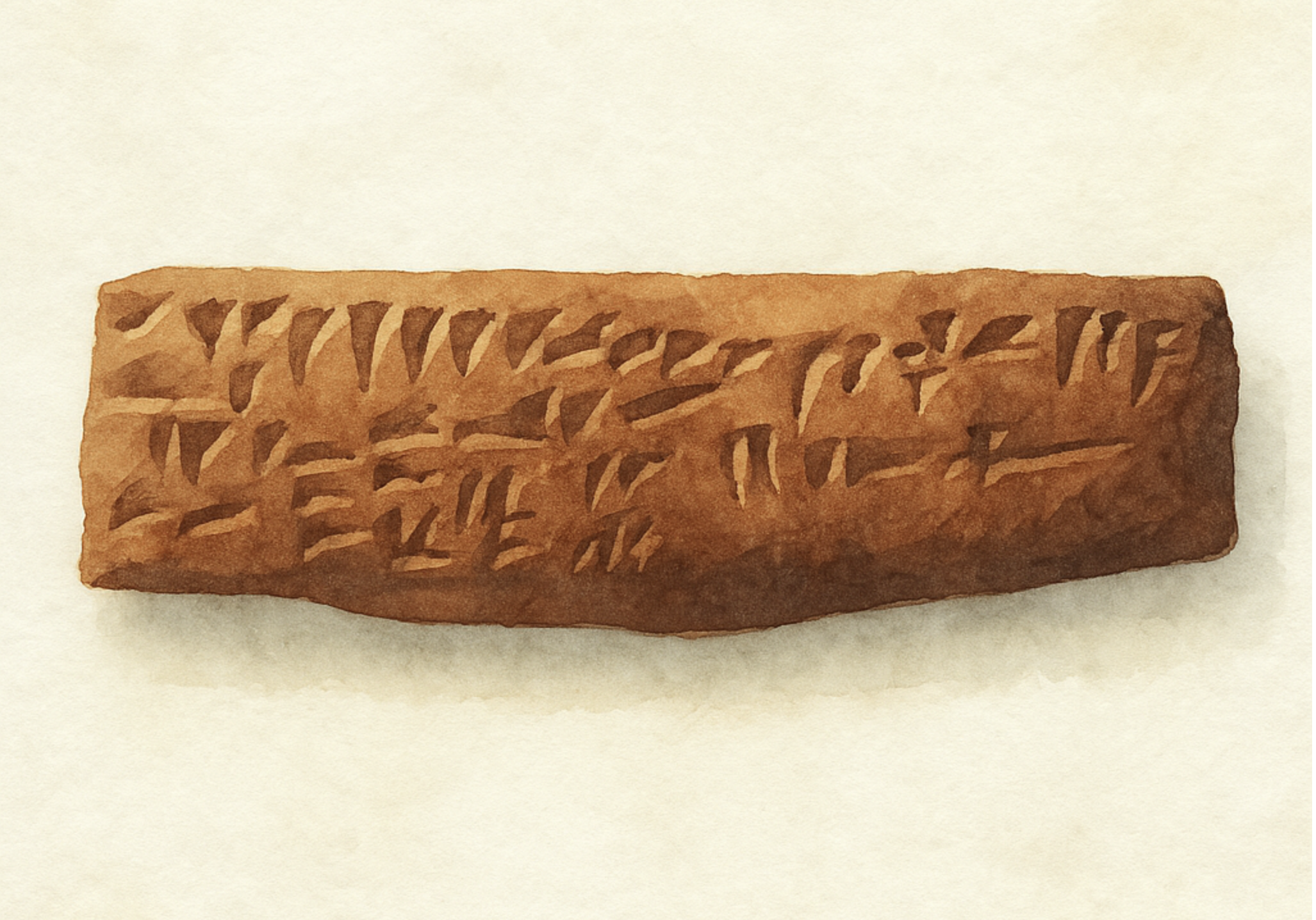
Biblical Hebrew and Ugaritic are closely related
In בראשית ל״ב (Genesis 32) we see Jacob sending messengers to his brother Essau. Jacob is concerned and worried that his brother will seek retribution for having had his birthright stolen and he needs to send messengers in advance to placate his brother and assess the situation. We see Jacob use phrases that are similar to those the written correspondence of the rulers of Ugarit (second millennium BCE, located on the Mediterranean coast in what is modern day Syria). In verse 5 we read כֹּ֣ה תֹאמְר֔וּן לַֽאדֹנִ֖י לְעֵשָׂ֑ו כֹּ֤ה אָמַר֙ עַבְדְּךָ֣ יַעֲקֹ֔ב, “Thus you (pl.) will say to (ל / l) to my lord, to (ל / l) Essau, thus says your servant Jacob.” If we compare that the Ugaritic letter CAT 2.11 (RS 8.315), we read “To (l) my mother my lady (‘adtny), speak a word to [name: in Hurrian] and to [name: lit. “sister of the king”] your servant.”
In both of these texts, we see similar uses of the proposition ל / l to address a recipient of a message, which is to be communicated by a third party. Both texts address the recipient with the same title of respect, both texts command the messenger to speak, and in both texts the sender is humbling themselves by using the same word for servant. If one claims that this is coincidence, then they have to address the many letters that have been uncovered from this historical period. Apart from highlighting how much Ugaritic and Hebrew resemble one another, similarities such as these show how close the Hebrew Bible is to its canonical origins, as understood through the Jewish tradition.