This week we read in שמות (The Book of Exodus) about the priestly processes that הקב״ה (The Holy One) commands the Children of Israel, and the priestly roles that Aaron and his sons are assigned (Exodus 27:20-30:10). This parsha weaves together the language of craftsmanship with ancient religious practices, creating a guide for the Hebrews to engage with the Divine in a way that is tangible to them and meaningful. For Jews today, and the modern Western reader, the practices of the Ancient Temple and sacrifices may seem foreign and barbaric. Presently, we have no Temple in Jerusalem where we are required to make sacrifices; instead, we have our prayers through which we recreate the Temple sacrifices in an abstract and symbolic way.
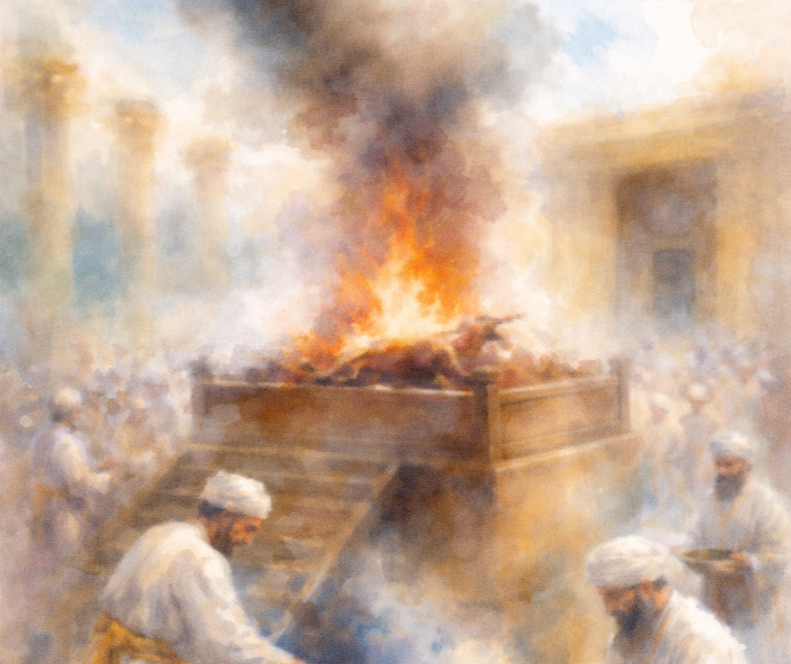
Although we are unable to offer these ancient sacrifices today, there is one way that we can connect them to our modern life. In Exodus 29:18 we read וְהִקְטַרְתָּ֤ אֶת־כׇּל־הָאַ֙יִל֙ הַמִּזְבֵּ֔חָה עֹלָ֥ה ה֖וּא לה׳ רֵ֣יחַ נִיח֔וֹחַ אִשֶּׁ֥ה לה׳ הֽוּא׃ where we are commanded to turn an איל (a ram) into an incense offering upon the altar as a sacrifice for ה׳, so that it will be a pleasing smell (רֵ֣יחַ נִיח֔וֹחַ) from the sacrificial fire for ה׳. One may take issue with the gory nature of this narrative and that ה׳ requires an animal to be butchered. That may be a legitimate critique, but most of us enjoy the smell of a barbecue and in the ancient Near East (as with the Levant today), the smell of grilled meat as you walk down the street is ubiquitous.
Although holy in origin, the text here reflects a deeply human understanding. Our nose plays a powerful role in how we feel emotionally and how we relate to the world. Having grown up in the “crunchy” parts of the Pacific Northwest, I have a hard time not seeing this רֵ֣יחַ נִיח֔וֹחַ אִשֶּׁ֥ה לה׳ as divine “aroma therapy” for the Children of Israel, and given the nature of the world these days, especially for those of us in Israel this week, we probably could all use a little aroma therapy.